Four-Family Investing and Cold Calling: A Cincinnati Playbook From Bret Halsey
Bret Halsey played professional soccer for FC Cincinnati. His first big real estate deal did better than his entire year playing. Getting there took nine months of cold calling, a 45-unit wholesale he never planned to do, and a Price Hill building that exploded.
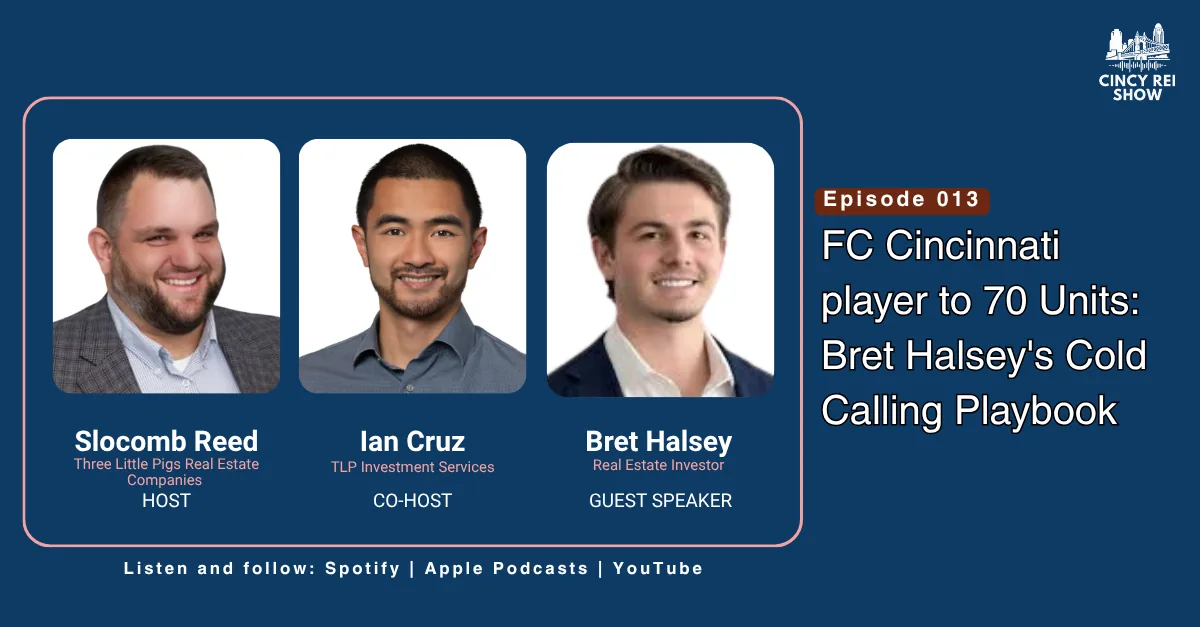
Episode 13 of the Cincy REI Show features Bret, an FC Cincinnati player turned full-time Cincinnati real estate investor who has acquired 70+ units in just a few years, almost entirely through direct-to-seller cold calling.
What the episode covers
- Why Bret spent 3 to 5 hours a day cold calling for nine months before landing his first deal, and why the Hamilton County auditor's list made it possible.
- The four-family as a starting vehicle: residential financing at 3.5% down, comp-based valuation that removes the guesswork, and a house hack structure that keeps two-thirds of the rental income intact even during vacancy.
- Why Pleasant Ridge became Bret's proving ground, and how buying one four-family on Cordell locked in his knowledge of every sale and rental on every street within a half mile.
- The model shift from BRRRR-and-hold to treating four-families as chess pieces: buy discounted, renovate light, sell to owner-occupants who pay a residential premium, then roll proceeds into larger assets.
- What separates a four-family flip from a marginal deal, why you need to grind through cold calls to find true diamonds, and why settling for spread alone is a trap at 10% to 18% hard money rates.
- The 1960s brick bunker breakdown: cast iron tubs, ceramic tile set in concrete, galvanized plumbing, boiler heat conversions, and why glazing subway tile white beats a full bathroom demo every time.
- The Price Hill explosion and what Bret learned about ACV versus RCV insurance coverage.
- How Bret is now eyeing the 12-unit as the natural next scale play: same architecture, same ubiquity, same renovation logic, but valued on NOI instead of comps.
Terms used in the episode
- ACV and RCV: actual cash value and replacement cost value, the two ways a policy can pay a claim.
- House hack: living in one unit of a small multifamily property while renting the others.
- NOI: net operating income, the basis for valuing larger apartment buildings.
Listen
Stream Episode 13 on Spotify or Apple Podcasts. For the house hack from another angle, read house hacking in Cincinnati with Chris Morgan.
Originally published in the Cincy Cash Flow Report on June 11, 2026.
Keep reading
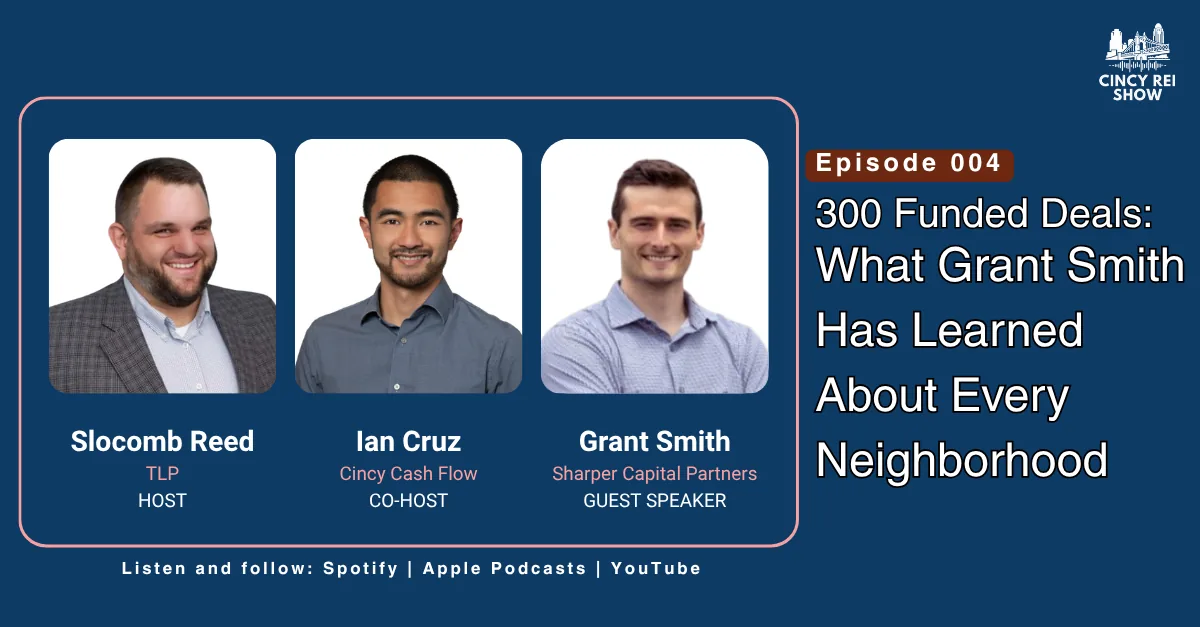
Cincinnati Hard Money Lending, Neighborhood by Neighborhood
Grant Smith of Sharper Capital Partners walked the Cincy REI Show through a live loan map of roughly 300 funded Cincinnati deals. Highlights from Episode 4.
2 min readRead →
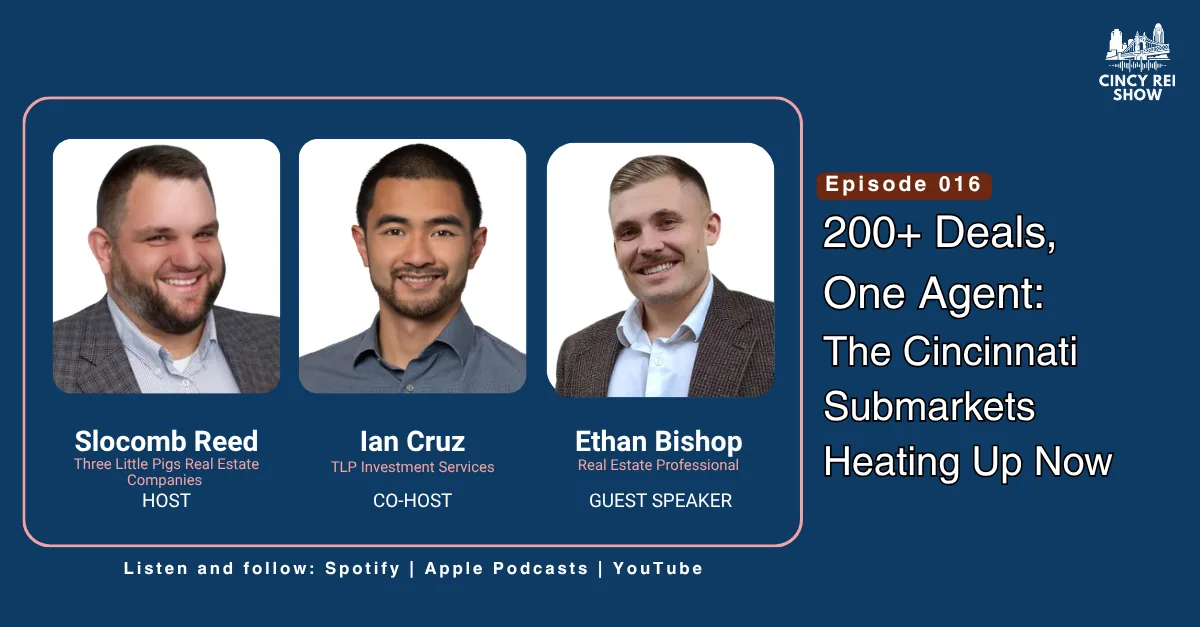
Cincinnati's Hottest Submarkets: What a Top Agent Sees Right Now
Ethan Bishop of Keller Williams Seven Hills on Loveland, Old Milford, Norwood, Pleasant Ridge, Evanston, Green Township and Lebanon. Episode 16 highlights.
2 min readRead →
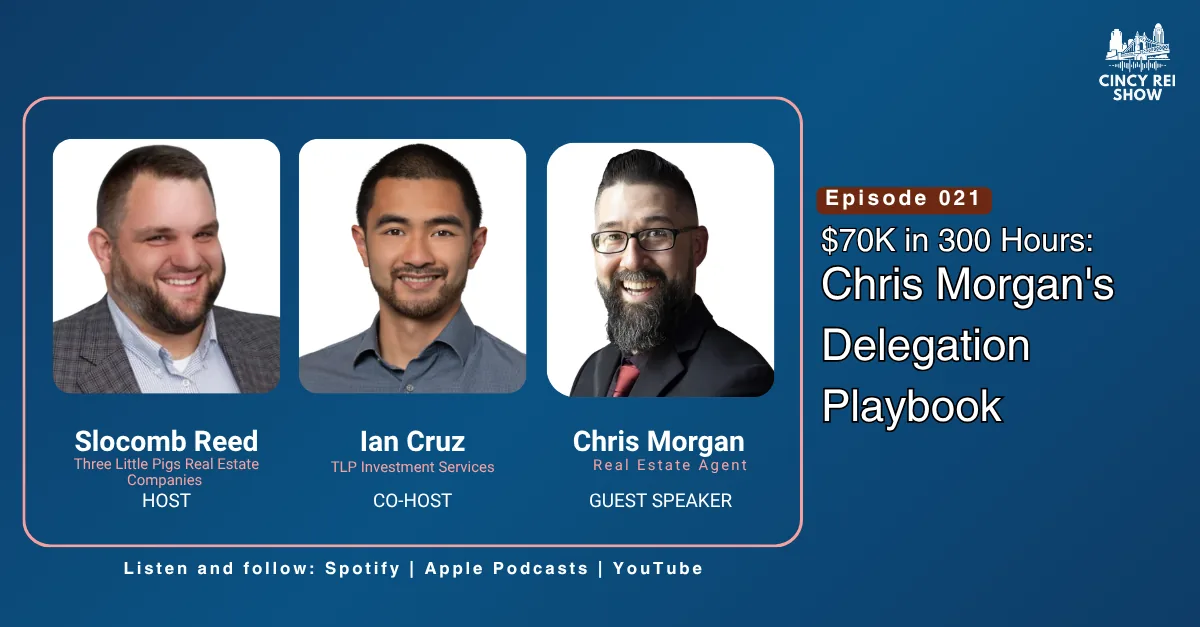
House Hacking in Cincinnati: Lessons From a Four-Time House Hacker
Chris Morgan built a portfolio while holding a W-2 job. House hack advice, Butler Metro versus CMHA inspections and 100-year-old buildings. Episode 21.
2 min readRead →