Unit Mix: The Most Underrated Decision in a Rental Portfolio
Two investors can buy the same number of doors, in the same city, in the same year, and end up running completely different businesses. What separates them is unit mix: the blend of single-family homes, duplexes, and small apartment buildings under the roof of one portfolio.
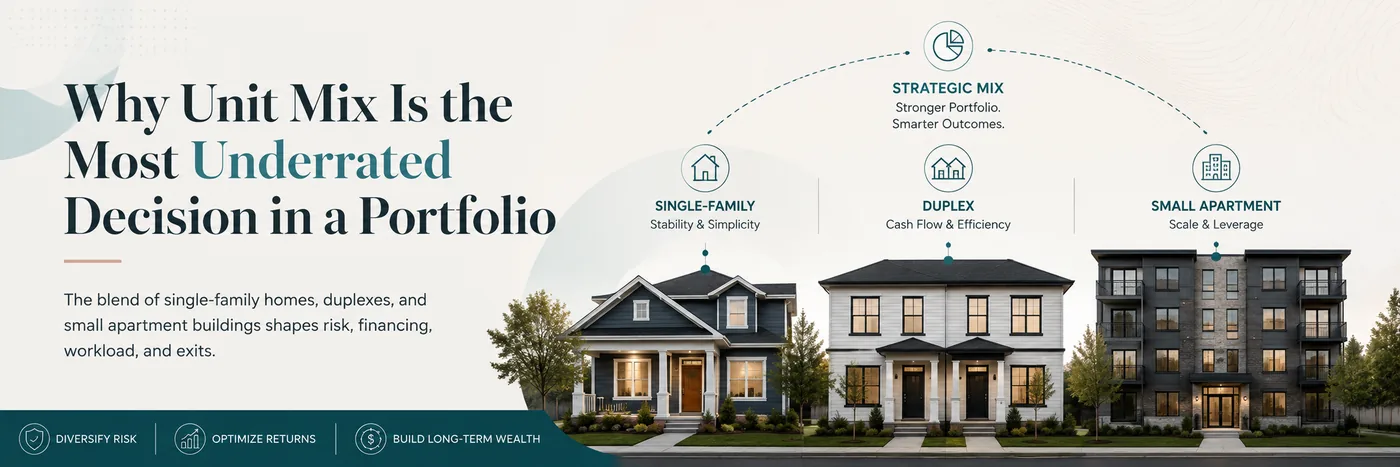
Most people count doors and never think about the mix. The mix sets your risk, your financing, your workload, and how you eventually get your money back.
What each type does for you
- Single-family homes carry the highest value per door, because you can sell them at retail to a family that wants to live there. They hold tenants the longest. They also give you the least density.
- Duplexes and small multifamily give you density and a lower cost per door, and they are valued on income instead of the neighbor's sale. The trade-off is a narrower pool of buyers when you exit.
- Put them together and you own two different machines: a retail exit and an income engine.
You value it on the income, not the neighbor's sale
A single house sells on what the house next door sold for. A small apartment building is worth what it earns, which is net operating income divided by a cap rate. That difference means you control the value. Raise occupancy, bring below-market rents to market, and trim the expense load, and the building is worth more, no matter what any individual house down the street did.
Mix drives your exit
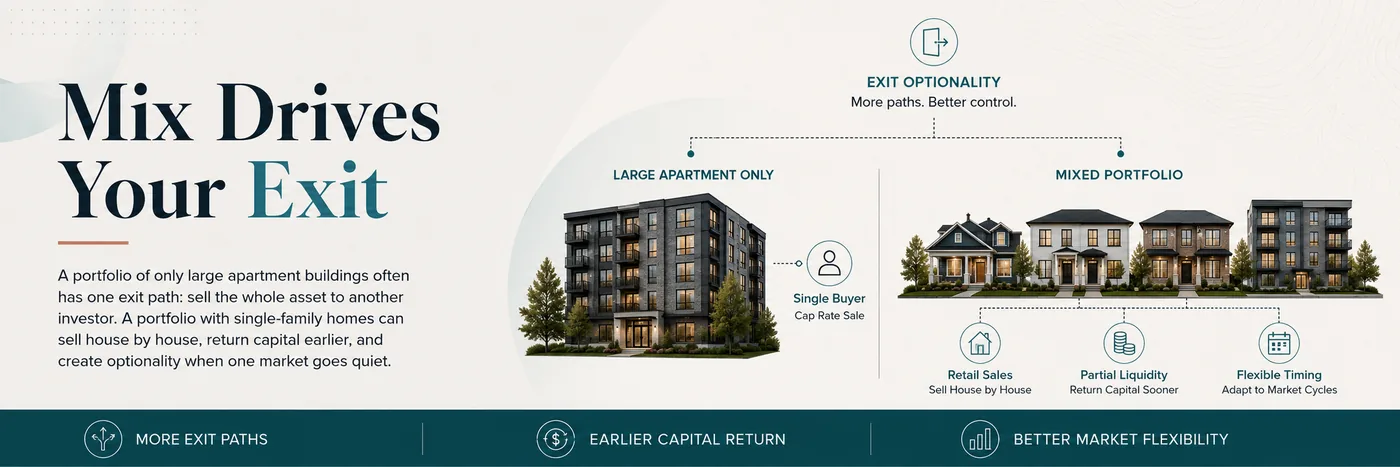
A portfolio of only large apartment buildings has one primary exit strategy: sell the whole thing to another investor on a cap rate, on that investor's timeline. A portfolio with single-family homes can sell house by house at retail, return capital early, and never depend on a single buyer showing up. Mix is optionality, and optionality protects you when one market goes quiet.
Mix drives your financing
Lenders look at a pool of small multifamily differently than they look at scattered single-family homes. A thoughtful mix lets you finance the income-heavy part efficiently while keeping the houses free to sell one at a time. The wrong mix can leave you either unbankable or unable to sell without breaking a loan.
How I think about a healthy mix
A base of small multifamily for cash flow and efficiency, plus single-family homes for retail exit and tenant stability, concentrated in neighborhoods where one team can run all of it. Income to pay you now. Optionality to get out clean later. That combination survives more markets than either piece on its own.
Count the doors if you want. The operators who last count the mix.
Educational only, and not investment advice or an offer of any kind. Real estate carries risk, including the loss of principal. Do your own diligence.
Related: how to value a scattered-site portfolio and school districts in single-family investing.
Originally published in the Cincy Cash Flow Report on July 23, 2026.
Keep reading
How to Value a Scattered-Site Portfolio: The Income Approach vs. Comps
A portfolio of houses is worth two numbers at once. How to run the income approach and comparable sales, and why to pay no more than the lower of the two.
5 min readRead →

School Districts and Single-Family Rentals: The Variable Most Investors Misread
Assigned schools shape price, tenant tenure and exit demand. How to match a school district profile to a cash flow or appreciation strategy before you buy.
4 min readRead →
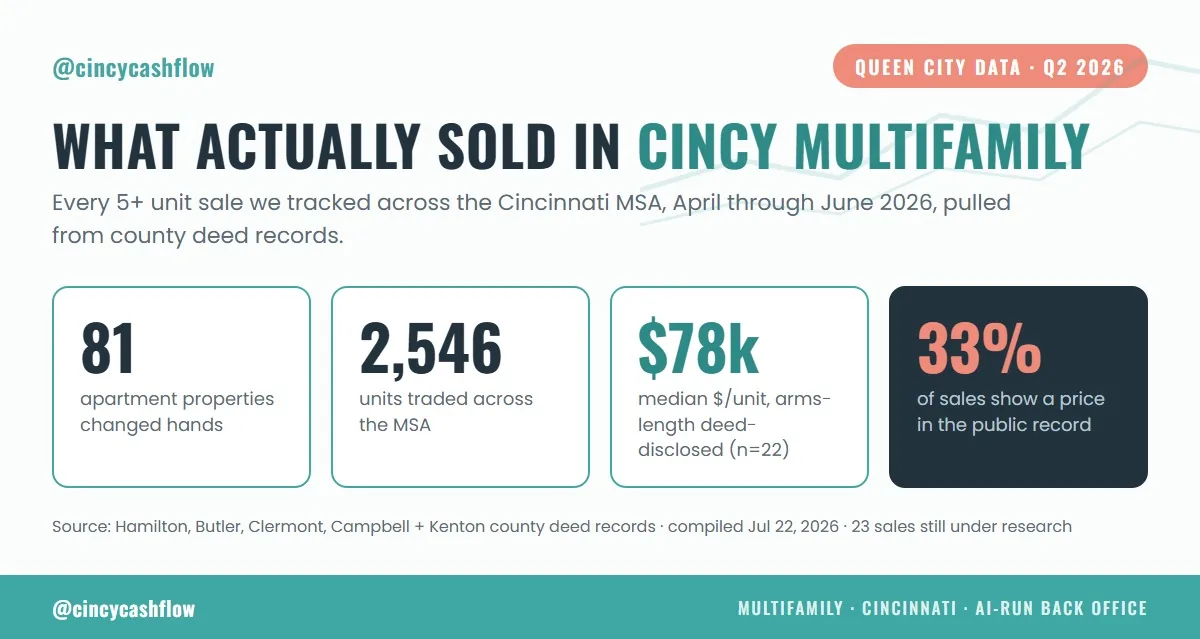
What Actually Sold in Cincinnati Multifamily in Q2 2026
81 apartment buildings and 2,546 units traded in Q2, but only 27 sales show a price. The 22 clean comps median $77,583 per unit. What the deed records show.
2 min readRead →