Cincinnati Multifamily Underwriting in 2026: 0% Rent Growth, Concessions and the Basis Trap
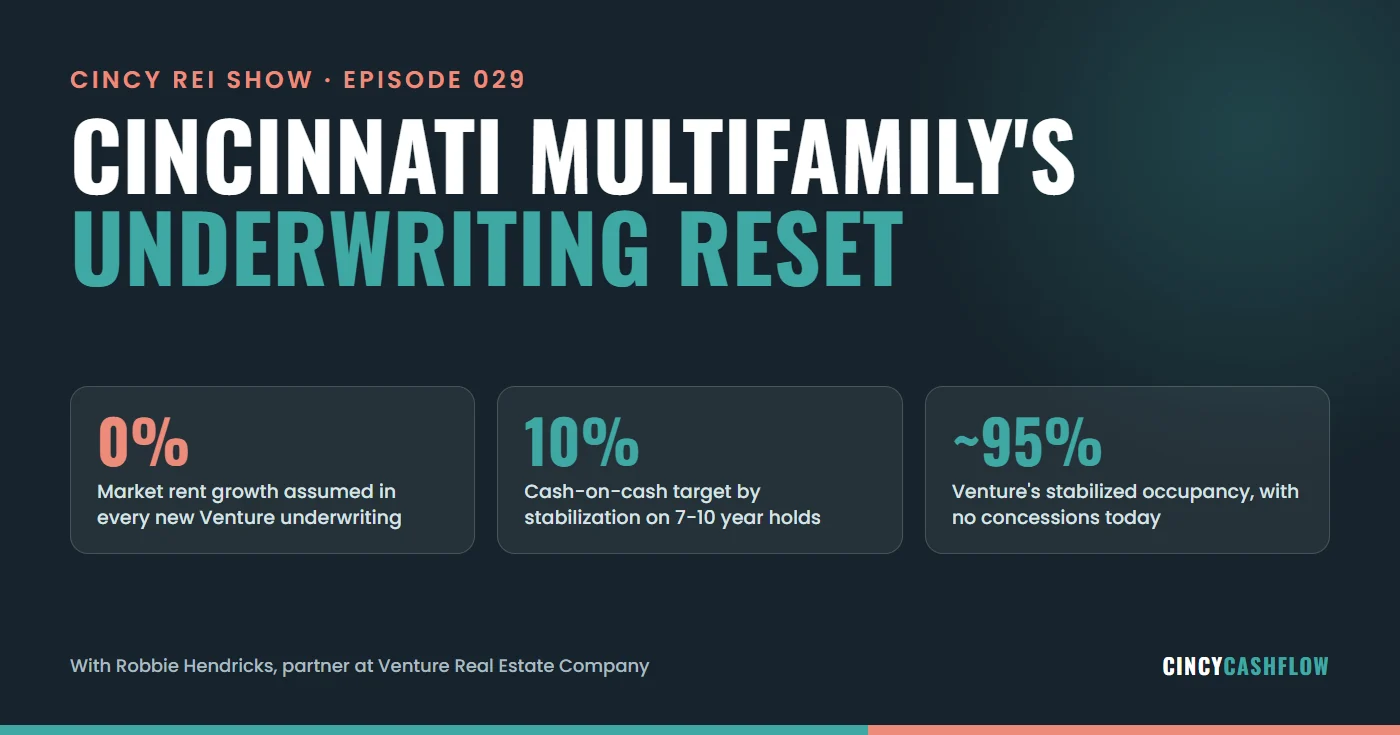
Venture Real Estate Company has acquired more than 3,600 multifamily units in Greater Cincinnati since 2013 and operates about 2,000 of them today. The firm has gone full cycle 32 times and met or beat its pro forma on every exit. This year new supply pushed it to offer concessions for the first time in 13 years, and every deal it underwrites now assumes the market won't raise rents.
Where new supply is softening Greater Cincinnati rents
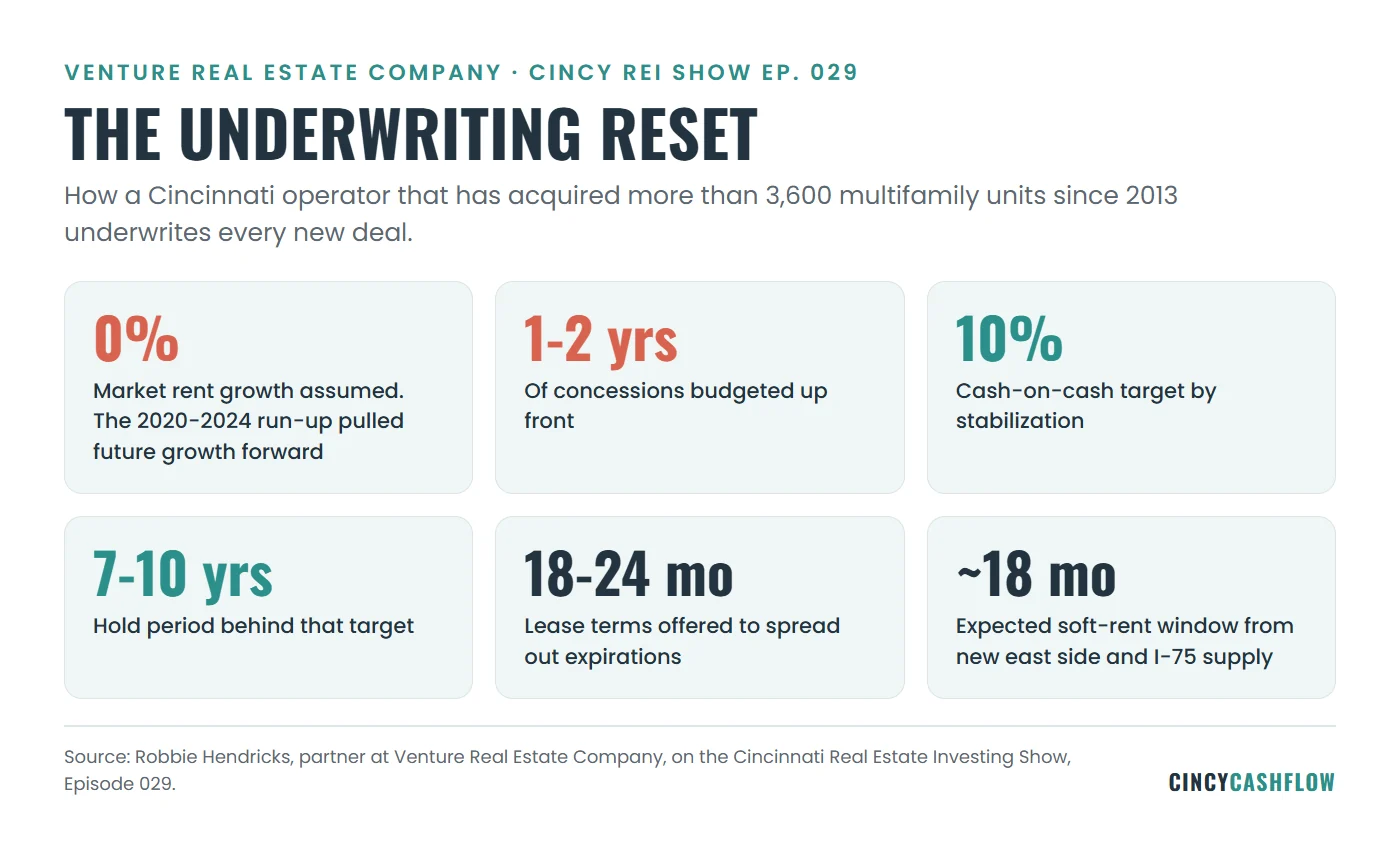
New construction is concentrated in two corridors, and Venture expects it to keep rents soft for about 18 months.
- East side: Eastgate and Loveland. New deliveries compete directly with older Class B product.
- North: West Chester and Liberty Township. The I-75 corridor keeps adding new units.
Some of Venture's nicer properties dropped to 88% to 89% occupancy during the concessions stretch. The stabilized portfolio is back to about 95% occupancy, with no concessions offered today. To keep a soft season from hitting all at once, Venture now offers 18- and 24-month leases to spread out expirations.
How Venture grades A, B and C. Robbie rates the asset and the market separately. His example is a 1970 property less than a mile from downtown Loveland: a C asset in an A location. Slocomb ties C class to Cincinnati's brick four- and 12-unit buildings and A class to amenities. Both hosts treat 1975 to 1995 construction as the gray zone.
Why Cincinnati avoided Sun Belt-style distress
Cincinnati multifamily still feels stuck. Transaction volume is down, rates are volatile, and many sellers are holding onto 2022 valuations that no longer pencil.
The difference from the Sun Belt is the debt underneath:
- Cap rates never compressed as far here, so values had less room to fall.
- Owners used less bridge and floating-rate debt, so fewer deals face a rate reset they can't cover.
- In-place cash flow still covers debt service at refinance on most stabilized deals.
Ohio is gaining on affordability and job growth in Hamilton and on the east side. Venture's own investor update ranked Cincinnati fifth among Midwest metros for homeownership under 35.
What's Working in Cincinnati
The 5 underwriting rules Venture runs on every deal now:
- Assume 0% market rent growth. Robbie estimates a 20% to 30% rent run-up from 2020 to 2024 pulled future growth forward.
- Budget concessions for the first year or two. Treat them as a cost of buying into a supply wave.
- Target 10% cash-on-cash by stabilization. Hold periods run 7 to 10 years to get there.
- Stagger lease expirations. Longer leases keep a soft month from becoming a soft quarter.
- Watch your basis. Overpay for 2004 construction, renovate it, and you are all in at new-construction pricing while brand-new product undercuts you.
Venture also runs a sell box. It weighs whether an asset still fits the firm's direction and its investors' timelines. As it scales, it is moving away from scattered-site properties and C-class submarkets.
Lessons From the Field: Scaling From 4 Units to 40
Robbie's advice for operators trying to grow is about sequence.
Build investor relationships before you need the capital. Build a track record first, so the conversation is about results. Look at portfolios of smaller properties instead of competing with institutions on 150- to 200-unit deals, where the buyer pool is deepest and the pricing is thinnest.
- Raise from relationships you already have, and start them early.
- Let the track record carry the pitch.
- Buy where institutions don't. Small-property portfolios are a real opening.
- Underwrite flat rents so growth stays upside.
His hidden gem, for the next time you tour on the east side: Coffee Emporium in Oakley.
About This Post
Robbie Hendricks is a partner at Venture Real Estate Company. He joined co-hosts Slocomb Reed and Ian Cruz of Three Little Pigs on Episode 029 of the Cincinnati Real Estate Investing Show. Listen to the full episode on Spotify or Apple Podcasts, and follow @thecincyreishow for clips.
Featured in the Cincy Cash Flow Report, Issue 22.
Keep reading

Where Multifamily Stands at Mid-2026: Joe Fairless on Cincinnati and the Sun Belt
Joe Fairless on Sun Belt supply, why the Midwest is weathering this cycle better, and the Class A, B and C divide. From a live Cincy REI Show recording.
2 min readRead →
Cincinnati Multifamily From the Broker Side: Lessons From JD Schmerge
A broker turned owner-operator on insurance, property taxes, C-class vacancy and the 10% renovation rule. Highlights from the Cincy REI Show.
2 min readRead →

Cincinnati's Hottest Submarkets: What a Top Agent Sees Right Now
Ethan Bishop of Keller Williams Seven Hills on Loveland, Old Milford, Norwood, Pleasant Ridge, Evanston, Green Township and Lebanon. Episode 16 highlights.
2 min readRead →