Scattered-Site Portfolio Acquisitions: Why the Friction Creates the Opportunity
Scattered-site portfolios are one of the most underestimated deal structures in residential real estate. Most investors pass on them. The due diligence is harder, the financing is more complex, and the renovation pipeline runs across dozens of addresses at the same time instead of one building. That friction is exactly why the opportunity exists.

The seller dynamic is different at this scale
Large scattered-site portfolios are hard to exit, and the buyer pool is thin. Most investors cannot underwrite hundreds of properties, manage inspections across 40 zip codes, coordinate financing on non-contiguous assets, and execute a renovation program all at once.
Sellers who need a clean, certain exit often accept terms that reflect that execution risk. Operational credibility matters as much as price.
The community impact is real and measurable
Cincinnati is the number one rental market in the country right now. Demand is outpacing supply, and the pool of sub-$250K single-family homes is finite and shrinking.
Every distressed property that gets fully renovated and returned to market gives one more family access to quality housing at an affordable price point. Operators doing this work fill a gap the market cannot fill on its own.
The deal structure rewards precision at volume
Scattered-site portfolios concentrate complexity. Due diligence, financing, and renovation all run in parallel across a high number of addresses. Teams that build systems around that complexity can create value at a scale smaller, cleaner deals do not offer.
The barriers are real, and so is the upside for operators built to handle them.
Keep reading
- How to value a scattered-site portfolio with both the income approach and comparable sales.
- Why we pursue scattered single-family portfolios when others cannot.
- Unit mix and what it does to risk, financing and exit.
Originally published in the Cincy Cash Flow Report on April 9, 2026.
Keep reading

Buying Scattered-Site Single-Family Portfolios When Others Can't
Why we buy scattered single-family portfolios at scale while much of the market moves the other way: fewer buyers, harder operations and a gap few firms fill.
2 min readRead →
How to Value a Scattered-Site Portfolio: The Income Approach vs. Comps
A portfolio of houses is worth two numbers at once. How to run the income approach and comparable sales, and why to pay no more than the lower of the two.
5 min readRead →
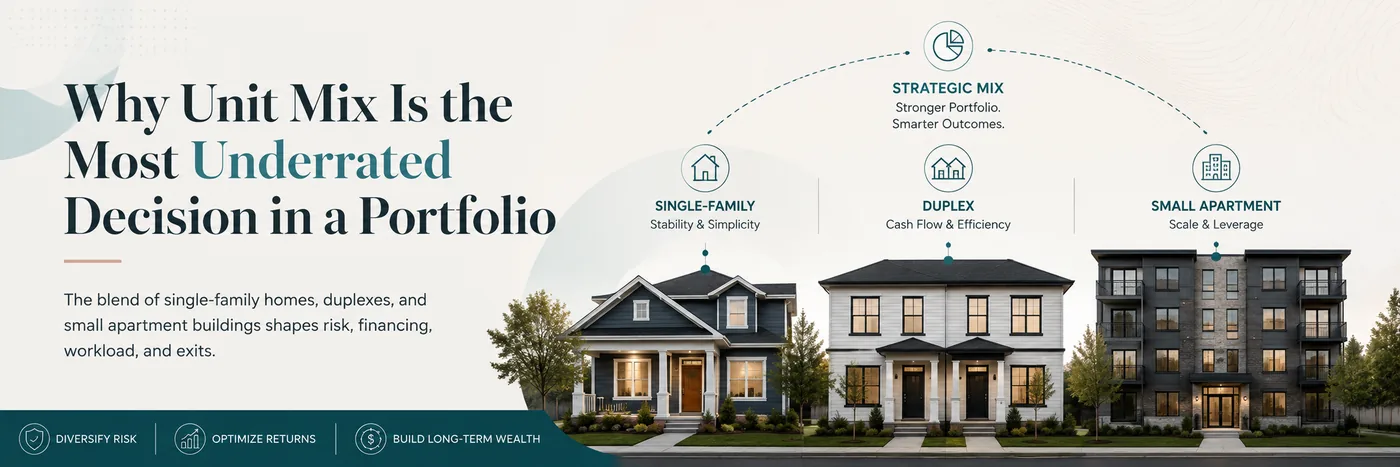
Unit Mix: The Most Underrated Decision in a Rental Portfolio
Single-family homes, duplexes and small apartments each do a different job. How unit mix sets your risk, financing, workload and exit.
3 min readRead →