Cincinnati Market Update, June 2026: The Banks Approval, Tax Credits and a Fed Reversal
Two things happened in Cincinnati last month that rarely happen at the same time: a major public plan passed unanimously, and a state-level rule change quietly rewired how affordable housing capital gets allocated across the region. Neither made national headlines. Both matter for positioning in this market.
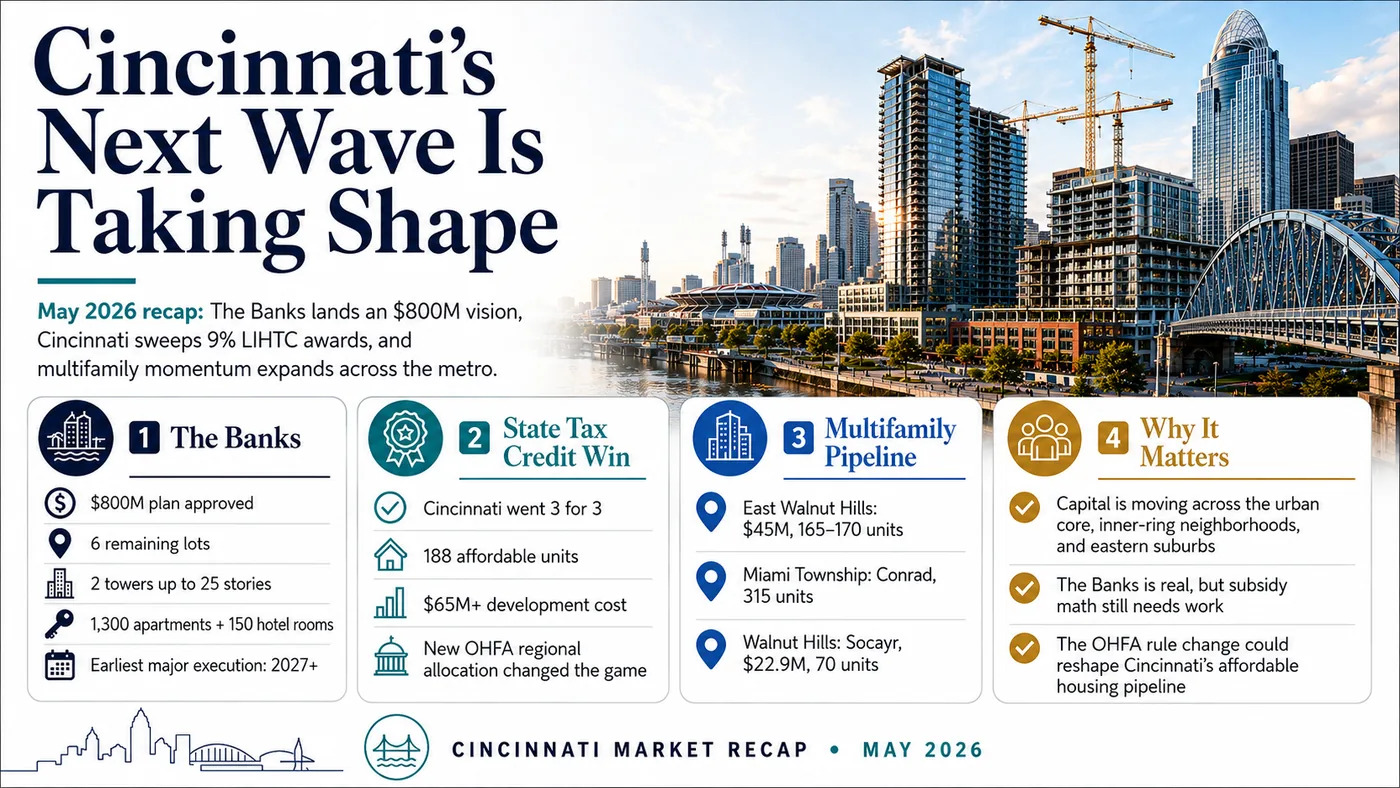
The map is changing faster than the models
The $800M Banks approval is the headline. The footnotes carry construction cost escalation, subsidy shortfalls, and a financing gap that puts meaningful groundbreaking at 2027 at the earliest.
The Ohio Housing Finance Agency's regional allocation change is already producing outcomes. Every Cincinnati developer who applied for 9% Low-Income Housing Tax Credits this cycle received one, which has not happened in recent memory.
Capital is also moving in three directions at once: the urban core, the inner ring, and the eastern suburbs. The pipeline ranges from ground-up infill to large suburban multifamily on former industrial land.
Rates, repricing and the narrowing window
The Fed is no longer talking about rate cuts. With inflation re-accelerating toward five to six percent and bond markets pricing better than eighty percent odds of a rate hike before year-end, the policy conversation has fully reversed from where it stood three months ago. New Fed Chair Kevin Warsh inherits an environment with little room to maneuver, and the 30-year Treasury at 5.19 percent suggests the bond market is not giving him the benefit of the doubt.
Housing demand is picking up in this environment. Buyers are pulling purchases forward out of fear that mortgage rates return to seven or eight percent, which pushes pending sales and purchase applications well above year-ago levels while available inventory has nearly stopped growing. More buyers competing for roughly the same number of homes puts a floor under prices, though much of that demand is borrowed from the future instead of driven by improved affordability.
Stress that built quietly in consumer credit and commercial real estate is becoming visible. Credit card delinquencies are above levels seen during the financial crisis, private credit default rates are climbing, and a wave of commercial properties originated in the low-rate years of 2021 and 2022 are hitting refinance walls they cannot clear.
For Cincinnati investors, this is the environment that creates motivated sellers and below-replacement-cost entry points, but only for operators with dry powder and disciplined underwriting. The near-term priority is positioning, not volume. Fixed-rate debt, conservative cash flow assumptions, and strong operational fundamentals separate the portfolios that compound through this cycle from those that become the next round of distressed deal flow.
National rents in context
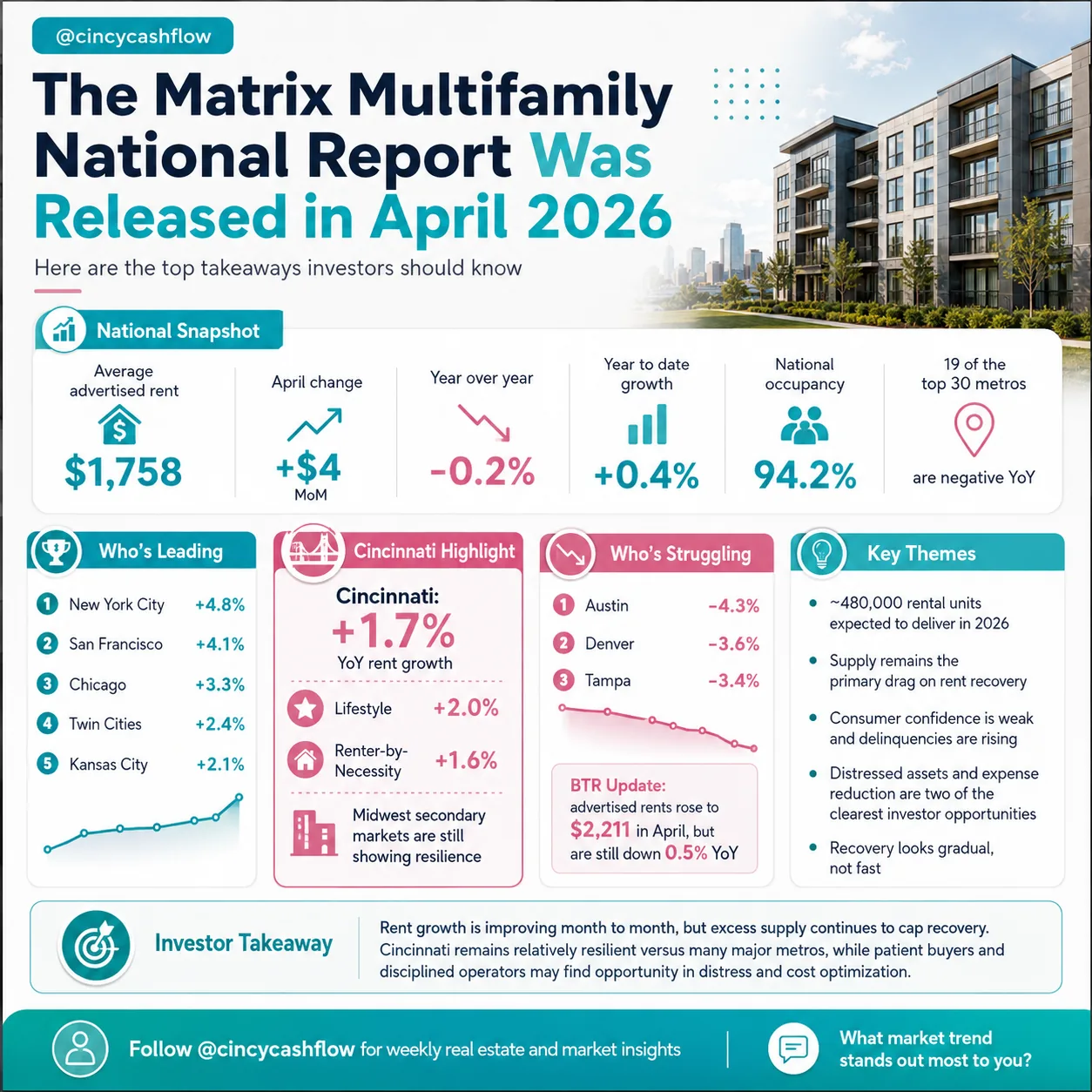
The April 2026 Matrix Multifamily National Report showed Cincinnati at +1.7% year over year in advertised rent, among the stronger large markets.
Earlier in the year, the outlook was different. See the April 2026 market update for the rate expectations at that point.
Originally published in the Cincy Cash Flow Report on June 11, 2026.
Keep reading
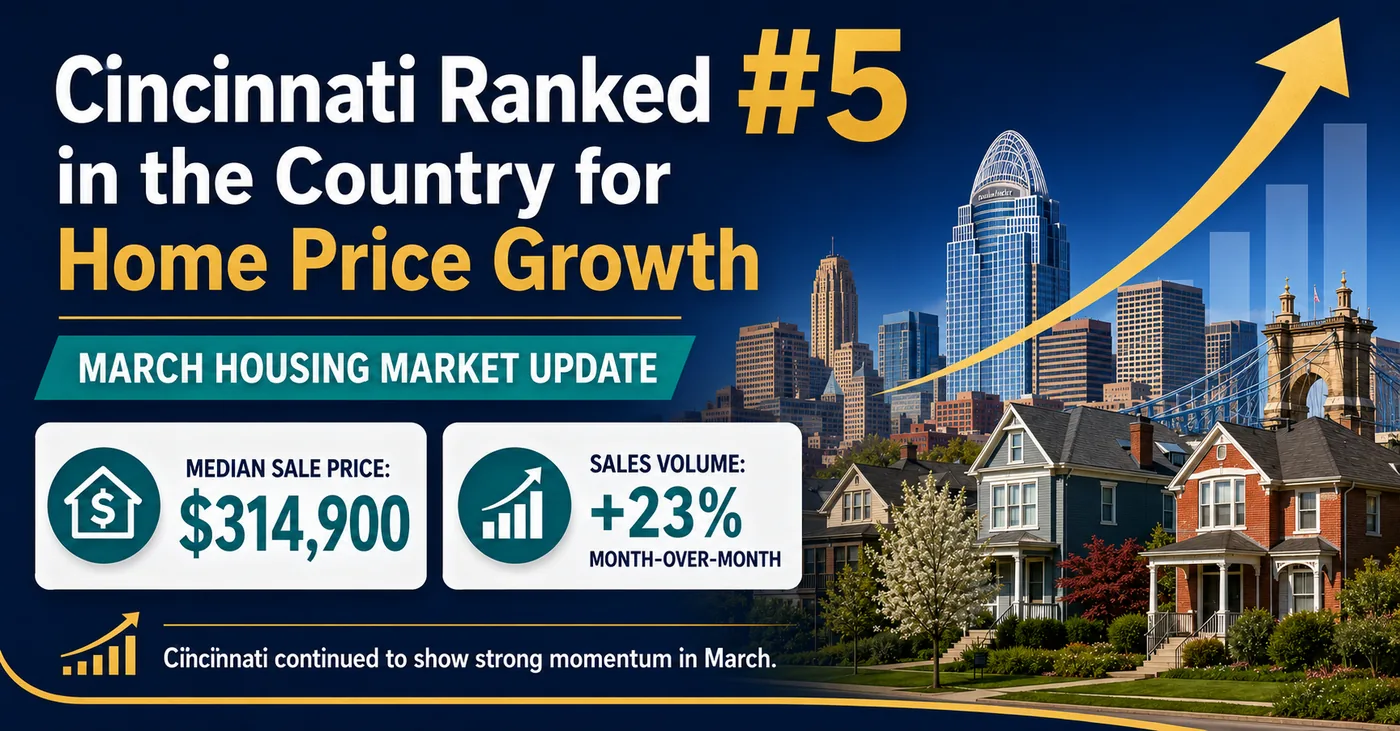
Cincinnati Housing Market Update, May 2026: Prices, Inventory and Public Capital
Median prices up 6.7% year over year, inventory at 1.9 months and days on market at 36. Why Cincinnati is compressing faster than the headlines suggest.
2 min readRead →
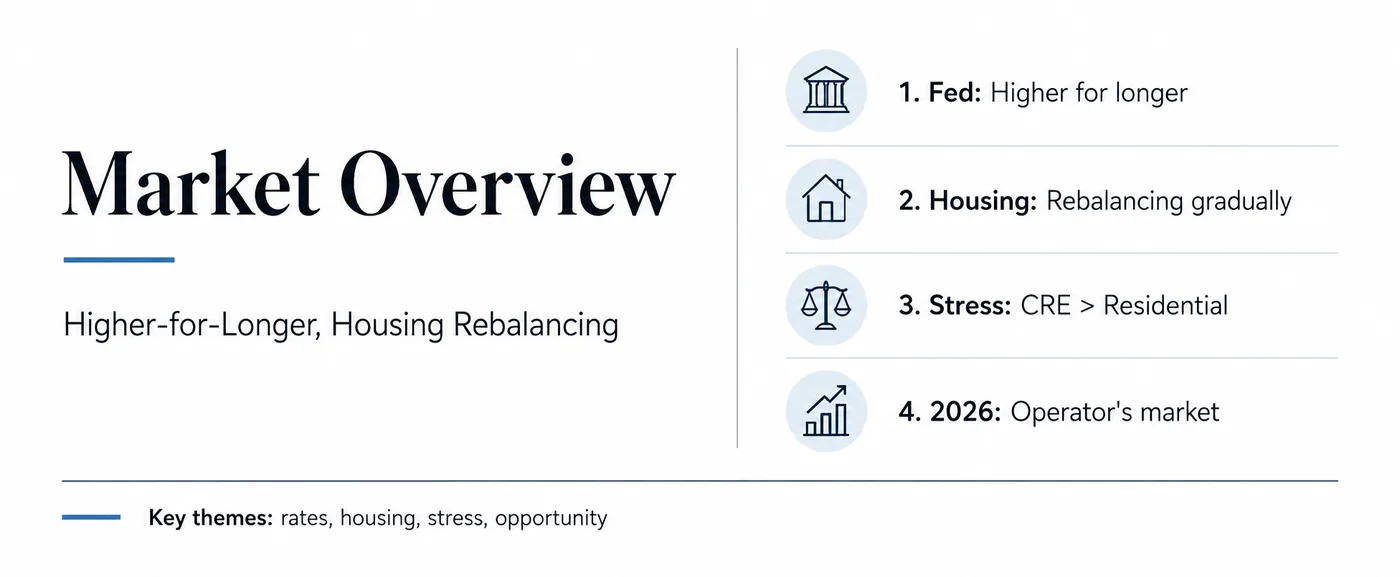
Higher for Longer: The Fed, Housing and Where Distress Is Showing Up
Rate relief is a possibility, not a plan. Where housing is rebalancing, where commercial real estate losses are realizing, and how operators should position.
2 min readRead →

Cincinnati Market Update, April 2026: Building Boom and Higher-for-Longer Rates
A GE Aerospace commitment, the highest multifamily construction quarter in two years and a Fed on hold. What March meant for Cincinnati investors.
3 min readRead →