Higher for Longer: The Fed, Housing and Where Distress Is Showing Up
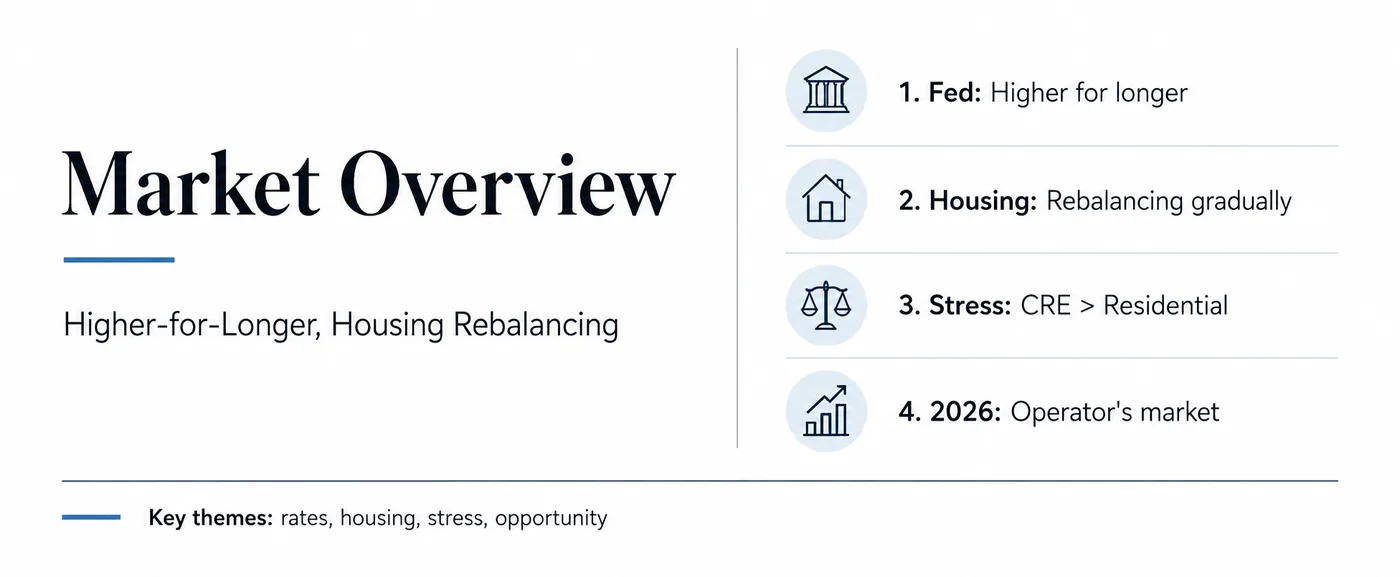
The Fed spent the month reversing itself: from hawkish hikes to a sharp dovish repricing after soft CPI, and back to live hike odds. The signal is not any one print. Policymakers keep looking through favorable data instead of declaring inflation won, so rate relief should be treated as a possibility and not a plan.
Housing is rebalancing
Housing is rebalancing gradually rather than breaking. New home prices have dipped below existing homes as builders compete on price, wages have outpaced home values for fourteen straight months, and the price decline needed for affordability has narrowed sharply. Foreclosures are rising off a low base, well below crisis-era levels. This looks like stabilization and not stress.
Stress is concentrated, not systemic
Sun Belt metros, including Miami, Austin, San Antonio, and Houston, show heavy seller surpluses and rising underwater mortgages.
Commercial real estate is where losses are actually realizing: record CMBS delinquency, Texas CRE loans trading at steep discounts, and 2021 to 2022 floating-rate multifamily deals wiping out equity. Residential is absorbing pressure through structure. Commercial is absorbing it through capital failures.
Oil and geopolitical risk remain the wildcard that could reorder this picture, with Hormuz exposure alone touching a third of global trade.
What to watch
This stays an operator's market.
- Target regional dislocation over broad exposure.
- Prioritize debt-structure-driven distress over operational distress.
- Eliminate high-rate floating exposure before it becomes forced.
- Treat any rate cut as upside, not underwriting.
For where this leaves the Cincinnati market, read the June 2026 update. For the earlier macro picture, see the 2026 housing market outlook.
Originally published in the Cincy Cash Flow Report on August 21, 2026.
Keep reading
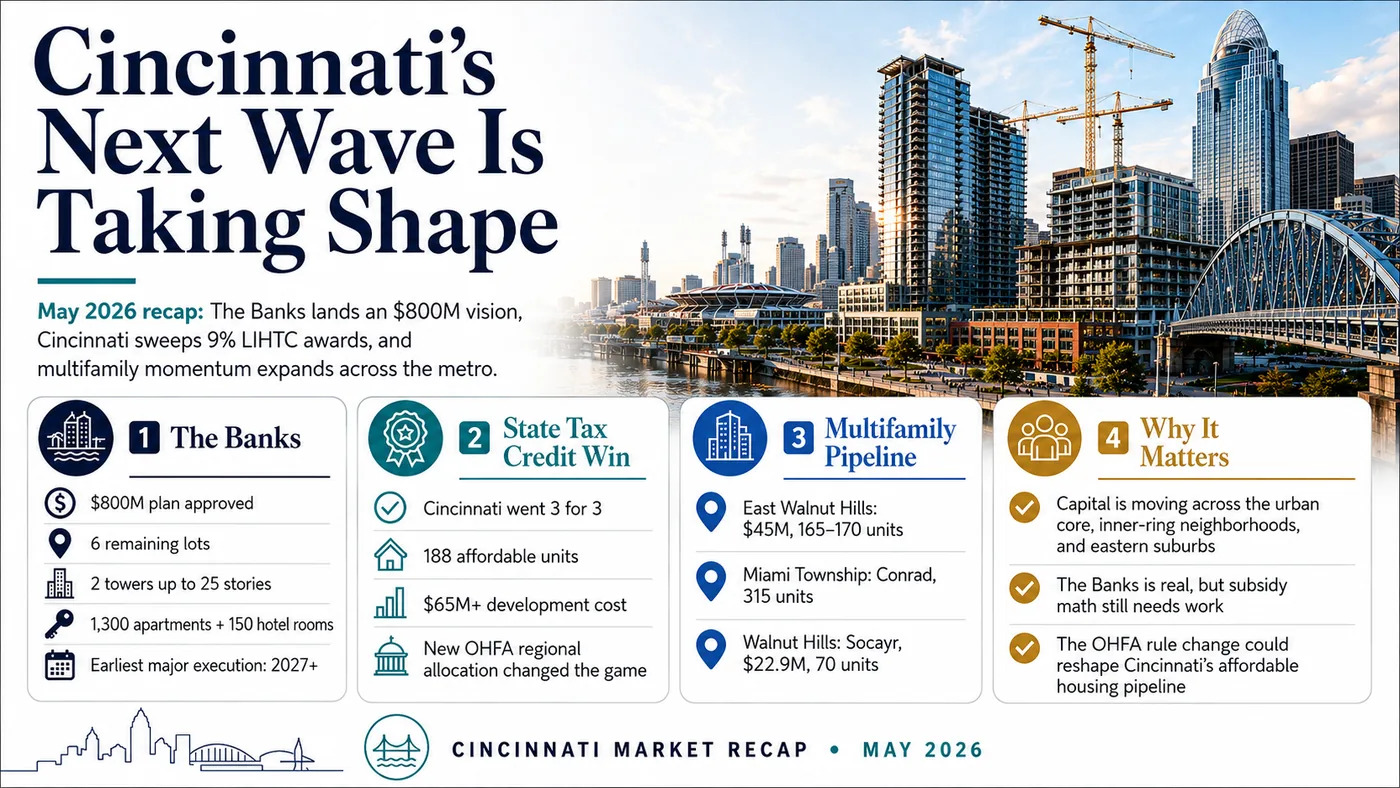
Cincinnati Market Update, June 2026: The Banks Approval, Tax Credits and a Fed Reversal
The $800M Banks plan passed, every Cincinnati 9% housing tax credit applicant won one, and the Fed stopped talking about cuts. What June means for investors.
3 min readRead →

2026 Housing Market Outlook: Market Reset, Affordability and Policy Risk
Solid growth, cooling labor, distorted shelter inflation and a healthier market structure. The macro signals shaping the 2026 housing market for investors.
2 min readRead →

Where Multifamily Stands at Mid-2026: Joe Fairless on Cincinnati and the Sun Belt
Joe Fairless on Sun Belt supply, why the Midwest is weathering this cycle better, and the Class A, B and C divide. From a live Cincy REI Show recording.
2 min readRead →